No. 79 · Dehydrated, DIY Mixes and Dry Provisions
Dried Apricot Protein Clusters
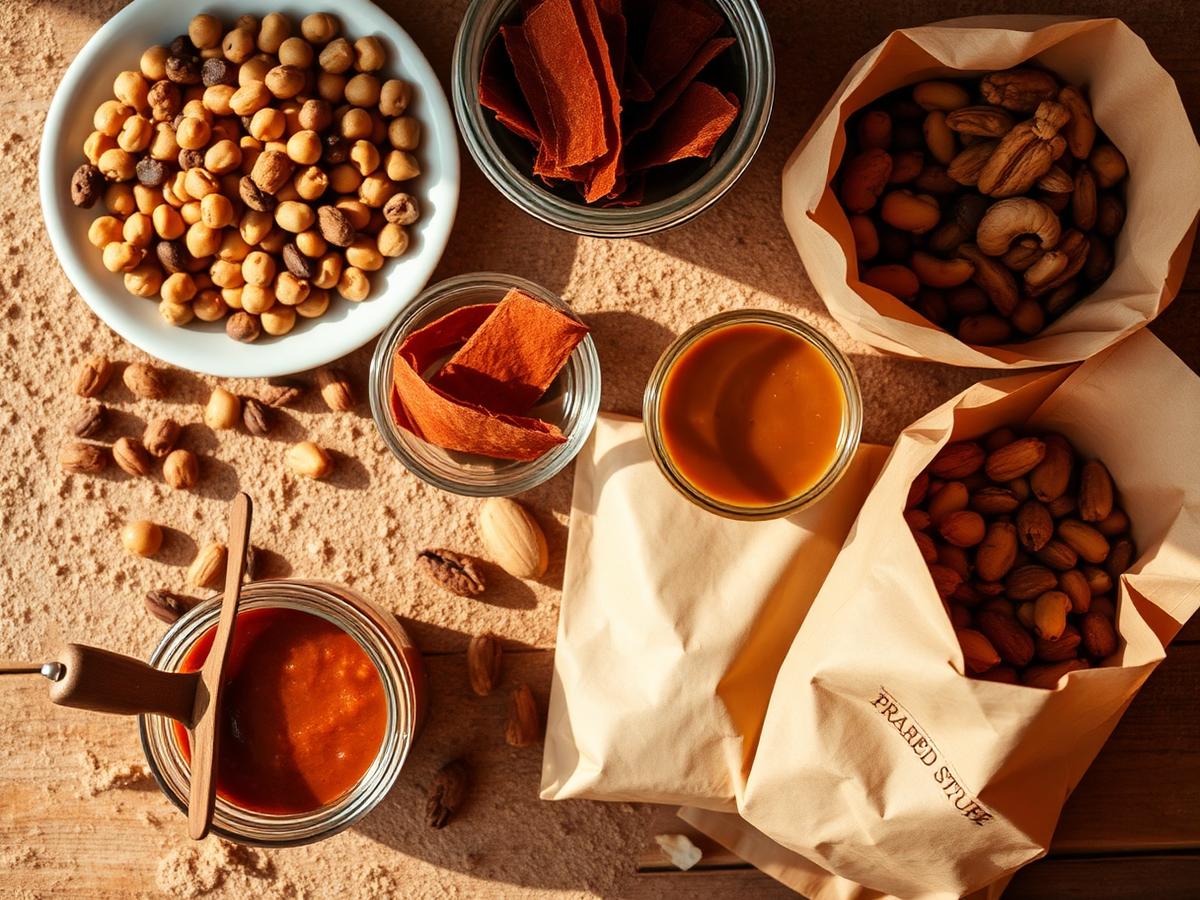
Chopped dried apricots rolled with pea protein powder and oat flour. It sits in our Dehydrated, DIY Mixes and Dry Provisions collection and takes roughly 15 minutes of hands-on prep with no cooking at all, which makes it realistic on a departure morning rather than only in an ideal kitchen. Like every recipe here it is completely pork-free — no bacon, ham, lard, pork stock or pork-derived gelatine — and it is written for travellers who are packing food into a bag, a cooler or a carry-on rather than plating it up at home.
- Prep
- 15 min
- Cook
- No cook
- Total
- 15 min
- Servings
- 6
- Difficulty
- Easy
Pork-free: Completely pork-free: no pork, bacon, ham, lard, pork stock or pork-derived gelatine. Check labels on any processed ingredient for pork derivatives, alcohol and allergens, as brands vary by country. Halal-friendly when verified ingredients are used.
Ingredients
Makes 6 travel portions · amounts shown in metric units
- Dried apricots, chopped300 g
- Pea protein powder60 g
- Oat flour80 g
- Maple syrup40 ml
- Ground cinnamon3 g
Equipment you need
- Knife and small chopping board
- Mixing bowl or the travel container itself
- Airtight travel container or wide-mouth jar
- Travel bottles under 100 ml / 3.4 oz for any spread or dressing
Preparation instructions
- 1
Set out everything you need and wash your hands — clean hands and a clean surface matter more on the road than in your own kitchen.
- 2
Weigh out the dried apricots, chopped and combine it in a large dry bowl.
- 3
Add pea protein powder, oat flour, maple syrup and toss until everything is evenly coated.
- 4
Keep everything completely dry: a single damp ingredient will spoil the whole batch.
- 5
Cool completely to room temperature before packing. Warm food in a sealed bag creates condensation.
- 6
Portion into resealable bags or jars by day, squeeze out the air, and label each one.
Make-ahead guidance
- Built for make-ahead: assemble the night before and it will be better, not worse, in the morning.
- Prep dry components up to three days ahead and keep them sealed at room temperature.
- No chilling needed, so you can batch this a week out and forget about it until you leave.
- Keep dressings, sauces and anything crunchy in separate pots until the moment you eat.
Packing instructions
- Pack in a rigid airtight container rather than a bag — squashed food is the single most common travel food complaint.
- Flying: solid food clears security in most countries, but spreads, dips and dressings count as liquids. Decant them into containers under 100 ml / 3.4 oz.
- Shelf-stable: no ice needed. Keep it out of direct sun and away from a hot car dashboard so nothing melts or goes rancid.
- Backpacking: repack into a resealable bag to cut weight and bulk, and carry your rubbish out with you.
- Label every container with the date and time it left the fridge. It removes all guesswork later.
Storage, chilling and reheating
- Storage duration
- Sealed and dry at room temperature: 2–4 weeks. Once opened, use within 5–7 days.
- Cooler / refrigeration
- Shelf-stable — no cooler needed
- Reheating
- Most of these are eaten dry. For the soup and couscous cups, add an equal volume of boiling water, cover for 8–10 minutes and stir before eating.
Food safety: keep perishable food at or below 4°C / 40°F, and never leave it unchilled for more than two hours — one hour above 32°C / 90°F. Use a clean, dry spoon each time, and when in doubt, throw it out.
Travel suitability
- Air travel: security-friendly and low-odour for a full cabin.
- Road trips and RVs: easy to eat one-handed at a rest stop, no cutlery drama.
- Backpacking and camping: sturdy, packable and forgiving of a warm day.
- Hotels and hostels: works with a kettle, a mini-fridge or nothing at all.
Allergy information
Contains or may contain: Gluten (wheat), Sulphites. Always read the label on processed ingredients — recipes for pork derivatives, alcohol and allergens vary by brand and by country. Cross-contamination is common in shared hostel kitchens.
Nutrition estimate (per serving)
- Calories
- 314 kcal
- Protein
- 10 g
- Carbohydrate
- 29 g
- Fat
- 19 g
- Fibre
- 5 g
- Sodium
- 285 mg
Estimated values. Actual nutrition varies with local brands, portion size and substitutions.
Substitutions
- Fresh herbs → half the quantity of dried, added earlier so they rehydrate.
Budget tips
- Buy the base ingredient — grain, beans, oats or bread — from a supermarket rather than a convenience store or transport hub. It is routinely half the price.
- Tinned and dried staples are the cheapest travel calories per gram anywhere in the world, and they never need ice.
- Scale the batch up and split the cost across the group — this recipe multiplies cleanly.
Filters this recipe matches
Browse more in Dehydrated, DIY Mixes and Dry Provisions or return to the 100 Pork-Free Travel Meals collection.