Egg Salad
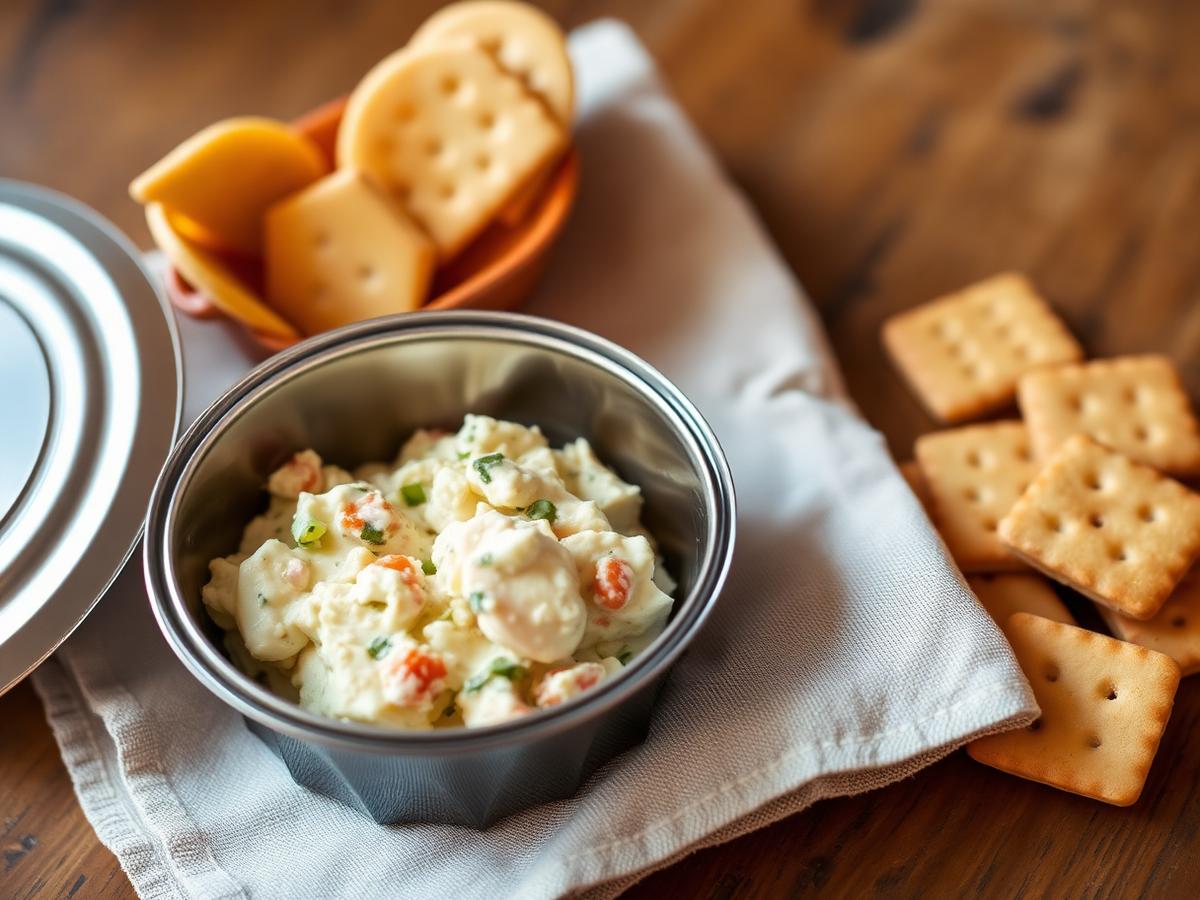
Travel Egg Salad
Egg salad is the classic traveller's protein: cheap everywhere, ready in minutes and endlessly packable. This version cuts the mayonnaise back and adds mustard and lemon so it holds its shape in a warm cooler instead of turning to soup.
- Prep time
- 10 min
- Cook time
- No cook
- Servings
- 2
- Cost
- Budget
Check before you fly: Eggs and dairy are restricted entering Australia, New Zealand and the United States. Finish this one before you land, or make it after you clear customs.
Ingredients
Serves 2 · amounts shown in metric units
- Hard-boiled eggs, peeled4 large (about 220 g)
- Mayonnaise(Sachets travel best)30 ml
- Dijon or yellow mustard10 ml
- Lemon juice5 ml
- Spring onion, finely sliced15 g
- Salt2 g
- Cracked black pepper1 g
- Crackers or flatbread to serve120 g
Global ingredient guide
- Mayonnaise → plain yoghurt, hummus or mashed avocado (labelled 'mayonesa', 'mayonnaise' or 'salad cream' depending on the country).
- Spring onion → red onion, chives ('cebollino'), or a pinch of onion powder.
- Crackers → rice cakes, cream crackers, Marie biscuits or any local flatbread.
Preparation steps
- 1
Buy eggs pre-boiled, or boil them for 9 minutes at home the night before and chill them fully in the fridge.
- 2
Peel the eggs and chop them coarsely in a bowl or straight in your travel container with a fork.
- 3
Stir in the mayonnaise, mustard and lemon juice. Keep it drier than you would at home — it loosens as it warms.
- 4
Fold through the spring onion, salt and pepper and taste.
- 5
Press the mix down flat, seal the container, and chill for at least 30 minutes before it goes in the cooler.
- 6
Serve with crackers or flatbread, packed separately so they stay crisp.
Travel tips
- Boil the eggs at home and travel with them whole and unpeeled — the shell is the best packaging there is.
- Flying? Decant the mayonnaise into a 50 ml travel bottle or use single-serve sachets to stay inside liquid limits.
- Pack crackers in a rigid box or the lid of your container so they don't crush in a daypack.
- In a hostel, mash everything in the container with a fork and skip the washing up entirely.
Cooler storage guidance
- Chill the finished salad in the fridge before it enters the cooler — a cooler holds temperature, it does not lower it.
- Keep the container against a frozen ice block, not floating in melt-water.
- Target 4°C / 40°F or below. In a well-packed cooler with fresh ice, that is roughly 24 hours.
- Once the cooler reads above 4°C / 40°F, eat within four hours or discard.
Food safety advice
- Egg salad is a high-risk food. Never leave it in an unchilled bag for more than two hours, or one hour above 32°C / 90°F.
- Use a clean, dry spoon each time. Double-dipping shortens the safe window dramatically.
- Do not refreeze or re-chill a container that has been warm. When in doubt, throw it out.
- Wash hands or use sanitiser before assembling — most travel food illness is a hygiene problem, not a recipe problem.
Nutrition (per serving)
- Calories
- 310 kcal
- Protein
- 16 g
- Carbohydrate
- 18 g
- Fat
- 20 g
- Fibre
- 1 g
- Sodium
- 480 mg
Estimated values. Actual nutrition varies with local brands and substitutions.