No. 13 · Sandwiches, Wraps and Handhelds
Tofu Banh Mi
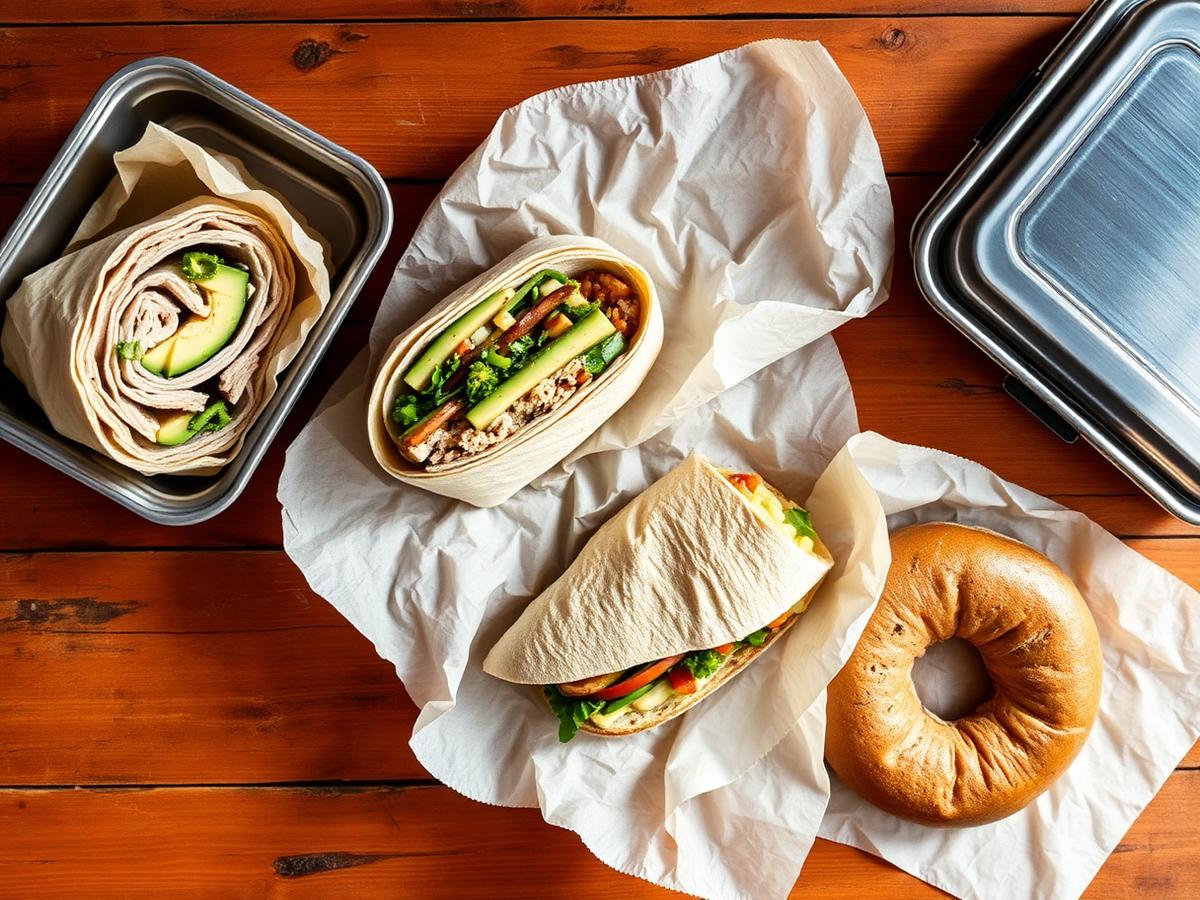
Pan-seared tofu with pickled carrot and daikon, coriander and vegan mayo in a crisp baguette. It sits in our Sandwiches, Wraps and Handhelds collection and takes roughly 20 minutes of hands-on prep with about 10 minutes of cooking, which makes it realistic on a departure morning rather than only in an ideal kitchen. Like every recipe here it is completely pork-free — no bacon, ham, lard, pork stock or pork-derived gelatine — and it is written for travellers who are packing food into a bag, a cooler or a carry-on rather than plating it up at home.
- Prep
- 20 min
- Cook
- 10 min
- Total
- 30 min
- Servings
- 2
- Difficulty
- Medium
Pork-free: Completely pork-free: no pork, bacon, ham, lard, pork stock or pork-derived gelatine. Check labels on any processed ingredient for pork derivatives, alcohol and allergens, as brands vary by country. Halal-friendly when verified ingredients are used.
Ingredients
Makes 2 travel portions · amounts shown in metric units
- Baguette sections2
- Firm tofu, sliced300 g
- Soy sauce30 ml
- Carrot and daikon, julienned150 g
- Rice vinegar60 ml
- Vegan mayonnaise45 g
- Fresh coriander15 g
Equipment you need
- Knife and chopping board
- Hob, pan or camp stove
- Airtight travel container or wide-mouth jar
- Insulated cooler bag with a frozen ice block
Preparation instructions
- 1
Set out everything you need and wash your hands — clean hands and a clean surface matter more on the road than in your own kitchen.
- 2
Prepare the baguette sections and keep it on a dry board so the base does not go soggy.
- 3
Mix or layer the filling: firm tofu, sliced, soy sauce, carrot and daikon, julienned, seasoning as you go and tasting before you build.
- 4
Spread any wet element in a thin layer to the edges only — a dry centre keeps the bread intact for hours.
- 5
Roll or press the handheld tightly, then wrap firmly in baking paper or foil so it holds its shape in a bag.
- 6
Cut in half through the wrapping, label with the date, and chill before it goes into the cooler.
- 7
Total hands-on time is about 20 minutes plus 10 minutes of cooking, and this makes 2 travel portions.
Make-ahead guidance
- Built for make-ahead: assemble the night before and it will be better, not worse, in the morning.
- Prep dry components up to three days ahead and keep them sealed at room temperature.
- Chill the finished dish fully in a fridge before it enters a cooler — a cooler holds temperature, it does not lower it.
- Keep dressings, sauces and anything crunchy in separate pots until the moment you eat.
Packing instructions
- Pack in a rigid airtight container rather than a bag — squashed food is the single most common travel food complaint.
- Sit the container directly against a frozen ice block, not floating in melt water, and open the cooler as rarely as you can.
- Label every container with the date and time it left the fridge. It removes all guesswork later.
Storage, chilling and reheating
- Storage duration
- Refrigerated at or below 4°C / 40°F: 2–3 days. In a well-packed cooler holding that temperature: up to 24 hours.
- Cooler / refrigeration
- Cooler or refrigeration required
- Reheating
- Good cold, and better warm: 60–90 seconds in a microwave, or a few minutes covered in a pan over a low camp-stove flame. Reheat once only, and heat it through to steaming.
Food safety: keep perishable food at or below 4°C / 40°F, and never leave it unchilled for more than two hours — one hour above 32°C / 90°F. Use a clean, dry spoon each time, and when in doubt, throw it out.
Travel suitability
- Road trips and RVs: easy to eat one-handed at a rest stop, no cutlery drama.
- Hotels and hostels: works with a kettle, a mini-fridge or nothing at all.
Allergy information
Contains or may contain: Gluten (wheat), Soy. Always read the label on processed ingredients — recipes for pork derivatives, alcohol and allergens vary by brand and by country. Cross-contamination is common in shared hostel kitchens.
Nutrition estimate (per serving)
- Calories
- 454 kcal
- Protein
- 23 g
- Carbohydrate
- 47 g
- Fat
- 19 g
- Fibre
- 6 g
- Sodium
- 665 mg
Estimated values. Actual nutrition varies with local brands, portion size and substitutions.
Substitutions
- Mayonnaise → plain yoghurt, hummus or mashed avocado. Sold as 'mayonesa' or 'salad cream' in some countries.
- Fresh coriander → sold as 'cilantro', 'dhania' or 'pak chee'. Flat-leaf parsley works if you dislike it.
- Soy sauce → tamari for gluten-free, or coconut aminos for soy-free.
- Fresh herbs → half the quantity of dried, added earlier so they rehydrate.
Budget tips
- Buy the base ingredient — grain, beans, oats or bread — from a supermarket rather than a convenience store or transport hub. It is routinely half the price.
- Tinned and dried staples are the cheapest travel calories per gram anywhere in the world, and they never need ice.
- Freeze a water bottle instead of buying ice packs: it doubles as your ice block and then as your drink.
- Scale the batch up and split the cost across the group — this recipe multiplies cleanly.
Filters this recipe matches
Browse more in Sandwiches, Wraps and Handhelds or return to the 100 Pork-Free Travel Meals collection.